

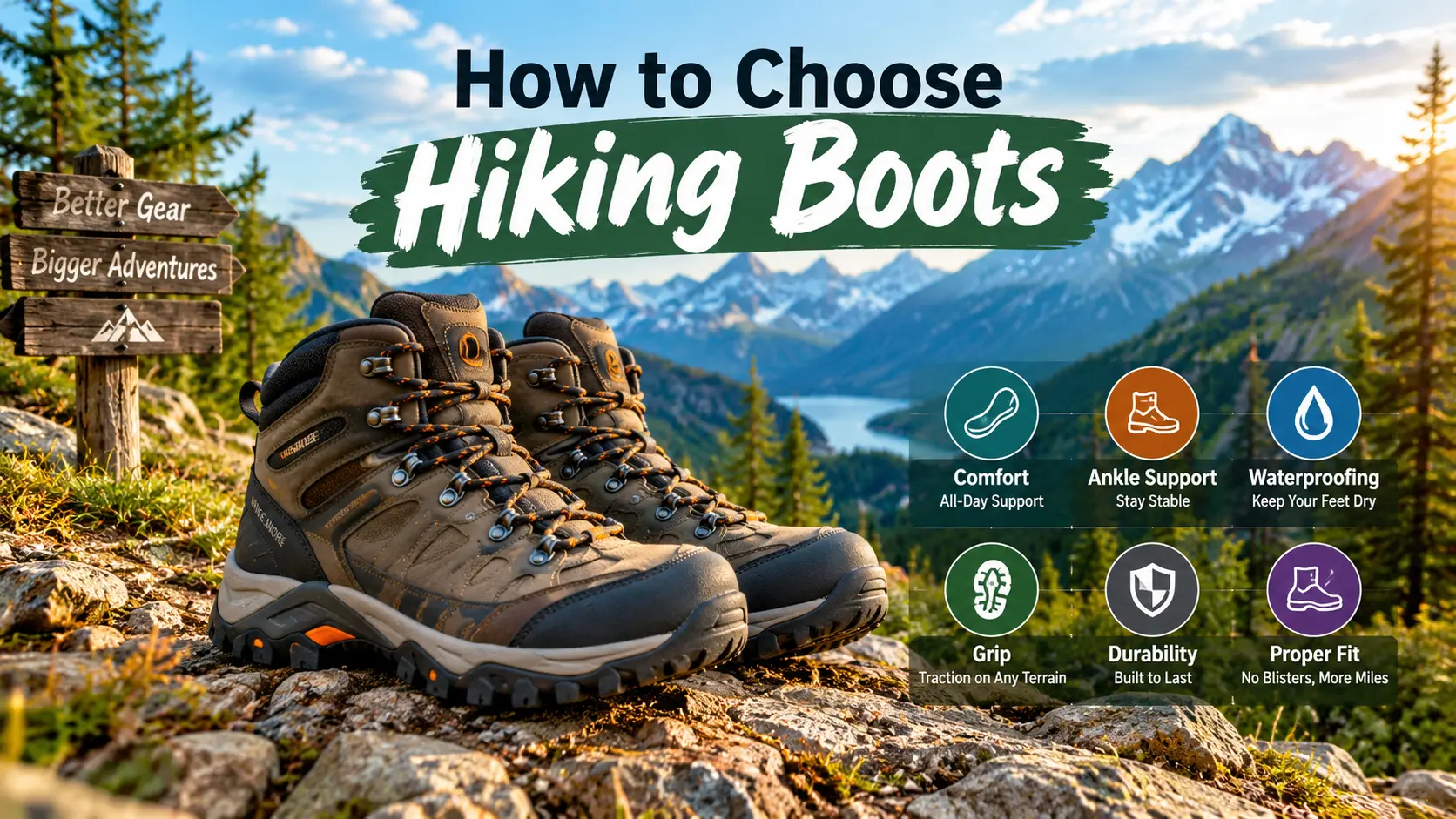
How to Choose Hiking Boots: 7 Easy Tips (Proven Guide)
Knowing how to choose hiking boots can make or break your time on the trail. From the muddy paths of the Appalachians to the rocky ridgelines of the Rockies, the wrong pair often means blisters, cold feet, or worse, a twisted ankle miles from the trailhead.
If you’re wondering how to choose hiking boots that actually suit your needs, this guide breaks it down step by step. Whether you’re buying your first pair or replacing a worn-out favorite, these seven tips on how to choose hiking boots will help you find boots you’ll love. Your feet carry you every mile, so they deserve a little extra attention before you spend your money.
In this guide to how to choose hiking boots, we cover the main types of hiking footwear, how to get the right fit, what to look for in soles and materials, and how to care for your boots so they last. We also answer the most common questions at the end, so you can shop with confidence and spend more time enjoying the trail.
Why Learning How to Choose Hiking Boots Matters
Many beginners treat footwear as an afterthought. They grab a pair of sneakers from the closet, head to the trailhead, and wonder why their feet hurt by mile three. Hiking is different from walking around town. Trails are uneven, wet, rocky, and often steep. Your feet and ankles work much harder, and your shoes need to protect, support, and grip the ground in ways that everyday shoes simply do not.
A good pair of hiking boots does several jobs at once. It cushions your feet over long distances, shields your toes from rocks and roots, keeps you stable on loose ground, and helps you stay dry and warm when the weather changes. A poor pair does the opposite. It rubs, slips, soaks through, and leaves you limping back to the car. Because comfort on the trail starts at your feet, learning how to choose hiking boots is one of the smartest steps you can take before any adventure.
1. How to Choose Hiking Boots Based on the Kind of Hiking You’ll Do
Before anything else, think about where and how often you’ll be walking:
- Day hikes on well-maintained trails: lightweight hiking shoes or low-cut boots are often enough.
- Multi-day treks or backpacking: you’ll want mid to high-cut boots with more support for carrying a heavier pack.
- Rough, rocky, or mountainous terrain: sturdier boots with stiffer soles give better protection and stability.
Be honest about your habits. If you hike a few times a year on easy paths, you do not need heavy mountaineering boots. If you plan to tackle long ridge routes, cheap lightweight shoes may leave your feet sore. Matching the boot to the terrain is the single biggest factor in how to choose hiking boots correctly.
It also helps to think about the weight you’ll carry. A light daypack with water and snacks puts little extra stress on your feet. A fully loaded backpack for an overnight trip can add 25 pounds or more, and every extra pound pushes down on your ankles and arches. The heavier your pack, the more support and stiffness you will want, which is a key part of how to choose hiking boots for backpacking.
Finally, consider how often you hike. Weekend hikers who head out most weeks will wear boots down faster than someone who goes a few times a year, so they may want to invest in more durable materials. If you hike occasionally, a mid-priced pair that fits well can last for years.
2. How to Choose Hiking Boots: Understand the Different Types
- Hiking shoes: low-cut and lightweight, best for easy trails and day walks.
- Mid-cut hiking boots: a popular middle ground, offering ankle support without too much bulk.
- High-cut backpacking boots: built for heavier loads and rougher ground, with maximum ankle and foot support.
When you think about how to choose hiking boots for weekend trips, mid-cut boots strike the right balance between comfort and support. Trail runners are another option for fast, light hiking, but they offer less protection on rocky ground and with heavy packs.
Hiking shoes feel closest to sneakers. They are flexible, breathable, and quick to break in, which makes them popular on well-groomed paths and warm-weather trips. The trade-off is less ankle support and less protection from rocks and mud.
Mid-cut boots rise above the ankle bone. That extra height helps stabilize your ankle on uneven ground and keeps debris out of your shoe. They suit most day hikes and light overnight trips, which is why many hikers buy them first.
High-cut backpacking boots are the heavyweights. They have stiffer midsoles, thicker uppers, and strong ankle support. If you plan to carry a heavy pack over rough terrain, they provide stability that lighter footwear cannot. For short, easy hikes, however, they can feel bulky and hot.
Trail runners are lightweight, breathable, and dry quickly. Some long-distance hikers love them because they reduce fatigue. They are best for hikers who already have strong ankles and travel light.
3. How to Choose Hiking Boots with the Right Waterproofing
Wet feet are miserable feet. Look for boots with a breathable waterproof membrane (such as Gore-Tex or similar technology) that keeps water out while letting your feet breathe. Waterproof boots are a smart choice for rain, creek crossings, snow, and muddy spring trails. Waterproofing is a big part of how to choose hiking boots for your climate.
However, waterproof does not always mean better. If you hike mostly in hot, dry places like the desert Southwest, breathable non-waterproof boots may actually keep you more comfortable, because waterproof membranes can trap heat. Check the weather and trail conditions on the National Park Service website before you decide.
Here is a simple way to think about it. If you often hike in wet, cold, or muddy conditions, waterproof boots will keep you comfortable and are worth the extra cost. If you hike mostly in dry, warm weather, a breathable boot will keep your feet cooler and dry out faster after a stream crossing. Remember that no boot is waterproof if water pours in over the top, so tall gaiters can help in deep mud or snow.
Waterproof membranes can also wear out over time. If you notice your boots are no longer keeping water out even after cleaning and treating them, it may be time to replace them.
4. How to Choose Hiking Boots That Fit Right
A boot that looks great but doesn’t fit properly will ruin any hike. Fit is the most important part of how to choose hiking boots. Keep these tips in mind:
- Shop in the afternoon or evening, when your feet are slightly swollen, just as they would be after hours of walking.
- Wear the same socks you’d hike in.
- Leave a thumb’s width of space at the toe so your toes don’t hit the front on descents.
- Walk around the store, ideally on an incline if there’s a test ramp.
- Your heel should feel locked in place, with minimal slipping.
Try on both boots, since many people have one foot slightly larger than the other. Brands also fit differently, so don’t assume your usual size will be right every time. If a boot pinches or rubs in the store, it will only feel worse after several miles.
Pay attention to the width as well as the length. Your forefoot should have room to spread out without feeling loose, and the boot should not squeeze the sides of your feet. Many brands offer wide or narrow versions, so ask if you feel pressure in the toe box.
Use the downhill test. Find a ramp or incline in the store and walk down it. If your toes slam into the front, the boots are too small or not laced tightly enough. Walk up the ramp too, and make sure your heel stays in place. A little movement is normal, but constant slipping causes blisters.
If you can, visit a specialist outdoor store where staff can measure your feet. Foot size can change with age, weight, and activity, so an old size may not be right anymore.
5. How to Choose Hiking Boots: Check the Sole and Grip
The outsole keeps you upright on wet rocks, muddy paths, and loose gravel. Grip is another key factor in how to choose hiking boots for wet or rocky trails. Look for:
- Deep, multidirectional lugs for grip
- A stiffer sole for rocky terrain, and a more flexible one for easier trails
- A well-cushioned midsole to reduce fatigue on longer walks
Press the boot and try to twist it. A stiffer boot resists twisting, which protects your feet on uneven ground. Also look for a defined heel brake, which helps you stay in control on steep descents.
The sole has three main parts. The outsole is the rubber on the bottom that grips the ground. The midsole sits above it and provides cushioning and support. The insole, or footbed, sits inside the boot and touches your foot. Together they decide how the boot feels and performs.
Softer rubber grips wet rock better but wears faster. Harder rubber lasts longer but can feel slippery on smooth, wet surfaces. If you hike mostly on rocky or wet trails, look for sticky rubber with deep lugs. If you hike on dry, packed dirt, a more moderate tread will do just fine.
6. How to Choose Hiking Boots: Weight vs. Support
Lighter boots reduce fatigue but offer less protection. Heavier boots offer more support but tire your legs faster over long distances. If you’re mostly doing shorter walks, lighter boots make sense. For longer treks or uneven terrain, the extra support is worth the weight. Balancing weight and support is central to how to choose hiking boots that suit your hiking style.
Material matters too. Full-grain leather boots are durable and supportive but heavier and slower to break in. Synthetic boots and fabric blends are lighter, dry faster, and usually feel comfortable sooner, though they may wear out earlier. Pick the balance that matches how you hike.
A useful rule of thumb is that extra weight on your feet feels much heavier than the same weight in your pack. Over thousands of steps, even a few extra ounces on each boot adds up. That is why many day hikers choose lighter footwear, while those carrying heavy loads accept more weight in exchange for stability.
Think about the terrain too. Rocky, uneven trails like the ridges of the White Mountains reward a sturdier boot, while smooth forest paths or desert washes are easier on lighter, more flexible shoes. If you want ideas for trails to test your boots on, check our guide to the best hiking trails in NH.
7. Break Them In: The Last Step in How to Choose Hiking Boots
Never wear brand-new boots on a big hike. Wear them around the house or on short local walks first to soften the material and avoid blisters on the day that matters. Start with an hour at a time, then build up to longer walks over a week or two. Breaking in your boots is the final step in how to choose hiking boots you can trust.
Pair your boots with moisture-wicking socks, such as merino wool or synthetic blends, and avoid cotton, which holds sweat and causes blisters. Carry a few blister patches in your pack just in case.
Some boots, especially full-grain leather ones, need more time to mold to your feet than lightweight synthetic ones. Plan for this before a big trip. If a pair still hurts after a proper break-in period, do not force it. Return them if the store allows, and try a different size or model.
Pay attention to hot spots. If you feel a rubbing or warm patch on your heel or toe, stop and deal with it right away. Adding a blister patch or adjusting your laces can prevent a small irritation from turning into a painful blister.
Boot Anatomy: A Quick Guide to How to Choose Hiking Boots
Understanding the parts of a boot makes shopping easier, and it makes how to choose hiking boots much simpler. The upper is the part that wraps around your foot, usually made of leather, synthetic fabric, or a mix of both. It protects your foot and gives the boot its shape. The toe cap is a reinforced rubber bumper at the front that shields your toes from rocks. The tongue sits under the laces, and a gusseted tongue, attached to the sides of the boot, keeps water and debris from slipping in. The heel counter is the stiff cup at the back that holds your heel in place.
Inside, the footbed gives you cushioning and arch support. Many stock footbeds are basic, and some hikers replace them with aftermarket insoles for better support. Understanding these parts helps you compare boots and explain what you need to store staff.
Lacing Tips for a Better Fit
Even a great boot can feel wrong if it is laced poorly. Good lacing is part of how to choose hiking boots, because it changes how any boot fits. A few simple tricks can solve common problems.
- Heel slipping: use a heel-lock lacing method by looping the laces through the top eyelets before tying. This pulls your heel back into the boot.
- Toes hitting the front on descents: tighten the laces firmly across the midfoot before heading downhill so your foot stays locked in place.
- Pressure on top of the foot: skip a set of eyelets over the sore spot to relieve the pressure.
- Loose ankles: pull the laces a little tighter at the top, but not so tight that they cut off circulation.
Check your laces regularly during the day. Feet swell, and boots that felt perfect in the morning may need adjusting by afternoon.
Socks and Insoles Matter Too
The best boots in the world can still cause blisters if you pair them with the wrong socks. Socks matter in how to choose hiking boots because you should always try boots on with the socks you plan to wear. Choose socks made of merino wool or synthetic blends that wick moisture away from your skin. Avoid cotton, which stays wet and rubs. Thicker socks add cushioning, while thinner ones give a snugger fit.
Some hikers also wear a thin liner sock under a thicker outer sock to reduce friction. If you are prone to blisters, this simple trick may help.
If the stock insole feels flat or unsupportive, consider replacing it. Aftermarket insoles can add arch support and improve comfort, especially on long hikes. Just make sure the new insole fits well and does not make the boot too tight.
How to Choose Hiking Boots by Season
The best boot can change with the weather. The season changes how to choose hiking boots more than most people expect.
Spring: trails are often wet and muddy as snow melts. Waterproof mid-cut boots with good grip are a smart choice.
Summer: heat is the main challenge. Lightweight, breathable boots or hiking shoes keep your feet cooler, especially in dry regions.
Fall: temperatures drop and trails can be damp with fallen leaves. Mid-cut waterproof boots offer a good balance of warmth and support.
Winter: cold, snow, and ice call for insulated, waterproof boots with deeper lugs, and sometimes traction devices that slip over the sole. Always check conditions before heading out, since winter hiking needs extra preparation.
If you hike all year, you may find that owning two pairs, one lighter and one warmer and more waterproof, is worth the cost.
Budget Tips for How to Choose Hiking Boots
Hiking boots come in a wide range of prices. In general, you get what you pay for in durability, materials, and technology, but the most expensive pair is not always the best for you. A well-fitting mid-priced boot will always beat an expensive one that hurts your feet.
If you are just starting out, consider spending a little more on boots than you would on other beginner gear, since good footwear affects your comfort more than almost anything else. Look for sales at the end of the season, but do not sacrifice fit to save money. Always try boots on, or make sure the store has a fair return policy if you shop online.
Common Mistakes When Learning How to Choose Hiking Boots
Even careful shoppers slip up. Watch out for these common mistakes:
- Buying for looks or brand name instead of fit. Comfort always comes first.
- Choosing boots that are too small. Your feet swell on long hikes, so leave room.
- Skipping the break-in period. Even great boots need time to mold to your feet.
- Buying too much boot. Heavy backpacking boots are overkill for easy day hikes.
- Ignoring the season. Insulated boots for winter and breathable ones for summer can feel very different.
- Shopping in the morning. Feet are smaller before they swell, so you may end up with a size that is too tight.
- Forgetting socks. Trying boots on with thin everyday socks gives you the wrong fit.
How to Care for Your Hiking Boots
A good pair of boots can last for years if you look after them. Brush off dirt and mud after each hike, and rinse them gently if they are very dirty. Let them dry naturally, away from direct heat like a radiator, which can damage glue and leather. Reapply a waterproofing treatment when water stops beading on the surface, and replace the insoles if they flatten out.
Remove the insoles and loosen the laces after a hike so air can circulate, which helps the inside dry and reduces odor. Store your boots in a cool, dry place rather than a hot car trunk or damp basement. Check the soles, stitching, and seams from time to time, and fix small problems before they turn into big ones.
When to Replace Your Hiking Boots
Even well-cared-for boots do not last forever. Watch for these signs that it is time for a new pair:
- The tread is worn smooth, and you slip more often than before.
- The midsole feels flat or compressed, and your feet and legs tire quickly.
- The sole is separating from the upper.
- Cracks or holes appear in the upper material.
- The boots no longer keep water out, even after cleaning and treating them.
Many hikers get several hundred miles out of a good pair, though the exact number depends on the boot, the terrain, and how you treat it. If your feet feel sore after hikes that used to feel easy, your boots may have lost their support.
Frequently Asked Questions About How to Choose Hiking Boots
What is the most important thing in how to choose hiking boots?
Fit. The most important part of how to choose hiking boots is finding a pair that locks your heel in place and leaves room for your toes.
Do I really need hiking boots, or can I wear sneakers?
For short, easy walks, sneakers may be fine. For rougher trails, hiking footwear gives better grip, protection, and support, so it is worth the investment.
Should hiking boots be tight or loose?
Neither. They should fit snugly around your heel and midfoot, with room for your toes to wiggle and about a thumb’s width of space at the front.
How long does it take to break in hiking boots?
Lightweight synthetic boots may feel comfortable within a few short walks, while leather boots can take a couple of weeks. Wear them gradually before any big hike.
Are waterproof boots always better?
No. They are great in wet and cold conditions, but they can feel hot in warm, dry weather. Choose based on where and when you hike.
What socks should I wear with hiking boots?
Moisture-wicking socks made of merino wool or synthetic fabric. Avoid cotton, which holds moisture and causes blisters.
How often should I replace my hiking boots?
There is no fixed rule. Replace them when the tread is worn, the support is gone, or the boots no longer protect your feet, even if they still look fine.
Final Thoughts
Learning how to choose hiking boots comes down to matching the boot to your terrain, getting a proper fit, and choosing features that suit the weather you’ll face. Take your time trying different pairs, and don’t be afraid to visit a specialist outdoor store where staff can check your fit in person.
Now that you know how to choose hiking boots, you’re one step closer to your next adventure. Ready to put them to use? Explore more tips and trail guides on our hiking trails blog.
Hi, this is a comment.
To get started with moderating, editing, and deleting comments, please visit the Comments screen in the dashboard.
Commenter avatars come from Gravatar.
thanks