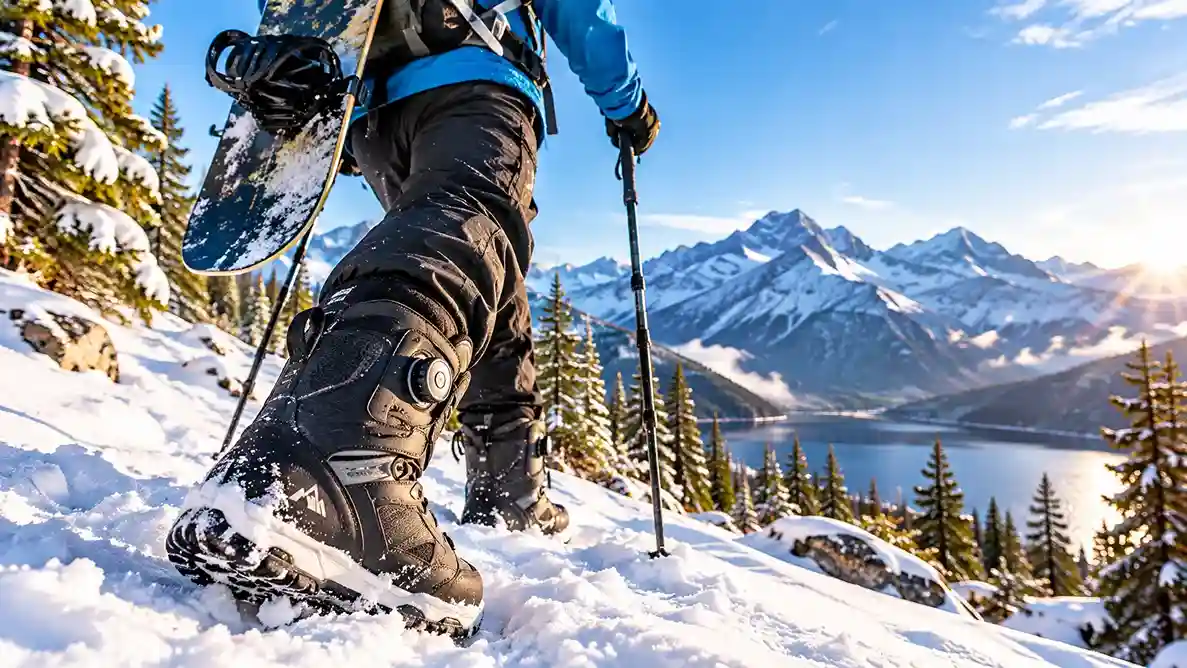
Fresh snow, untouched lines, and one problem: you have to get up there first. Hiking in snowboard boots is something many riders try, whether for a short walk to hike-to terrain or a longer approach. This guide explains when it works, when to choose different gear, and how to stay comfortable and safe.
Quick answer: Hiking in snowboard boots is usually fine for short, low-risk climbs. They are built for riding, not long walks, so for longer approaches choose gear with better walking comfort, reliable traction, and proper avalanche safety equipment.
Can You Go Hiking in Snowboard Boots?
Yes, within limits. Snowboard boots are warm and padded, but they are designed for control on the board, not for walking far. Their flex and ankle movement are limited compared with winter hiking boots, which can tire your feet and calves on long climbs.
When It Works
Short bootpacks to hike-to terrain, brief approaches on packed snow, and walks to the lift or parking lot are common uses. Some backcountry riders also report using snowboard boots with snowshoes or splitboards for approaches.
When to Choose Something Else
Long approaches, steep or icy slopes, deep powder without flotation, and any avalanche terrain call for better gear and training. A winter hiking boot, a splitboard-friendly touring boot, or a rigid-soled boot for crampons may be a better fit.
Snowboard Boots vs. Winter Hiking Boots
| Feature | Snowboard boots | Winter hiking boots |
|---|---|---|
| Purpose | Riding control | Walking comfort |
| Ankle movement | Limited | Usually more |
| Sole | Often soft and shaped for bindings | Usually a stiffer lug sole |
| Warmth | Padded and warm | Varies by insulation |
| Crampon use | Often not designed for it | Some models support it |
These are general differences, so check your specific boots.
7 Essential Tips for Hiking in Snowboard Boots
- Dial in the fit: Lock your heel, then loosen the upper laces or cuff a bit for uphill walking if your boots allow it.
- Choose warm, dry socks: Moisture-wicking wool or synthetic socks help with sweat. Bring a spare pair.
- Add traction: Microspikes, crampons that fit, or snowshoes can improve grip. Check compatibility first.
- Carry your board well: An A-frame or vertical carry keeps it secure, and some riders find vertical carry snags less in trees.
- Pace yourself: Climb slowly to limit sweating, and take breaks to avoid overheating.
- Layer smart: Vent or remove layers uphill and add them back at the top.
- Know your turnaround time: Decide before you go, and stick to it.
Choosing Traction and Flotation
Snowshoes with heel risers can help on steeper slopes, and many models fit snowboard boots. Microspikes help on packed or icy trails. A splitboard lets you climb and ride with the same setup, but it takes practice. Rent or borrow gear first if you are unsure.
Splitboard Boots vs. Regular Snowboard Boots
Splitboarders often use boots with better walking mechanics. Some use soft snowboard boots, while others use touring or mountaineering-style boots. If you plan regular backcountry trips, talk with a local shop or take an avalanche course before upgrading.
Safety Notes for Hiking in Snowboard Boots
- Avalanche terrain needs training, a beacon, shovel, probe, and a partner. Check your local avalanche forecast at avalanche.org before heading out.
- Never hike alone in remote areas, and tell someone your plan and return time.
- Respect resort rules. Hike-to terrain and uphill access may be restricted or closed, so follow signs and ask patrol.
- Watch for hidden hazards: tree wells, cliffs, and thin snow cover over rocks.
- Frostbite and hypothermia are risks. Keep your feet and hands warm and dry.
- Follow Leave No Trace principles at lnt.org.
Weather and Timing Tips
Check temperature, wind, and snow conditions. Cold mornings may firm up snow, while warm afternoons can soften it. Start early and allow plenty of daylight for the descent.
Foot Care and Blister Prevention
Break in new boots before a big day. Use tape or blister pads on hot spots, and stop to fix problems early. Dry your boots and liners after every outing.
Conditioning and Pacing
Hiking in snowboard boots with a board on your back is a workout. Build leg strength and endurance with regular walks and hikes. Browse our best hiking trails to find good training routes.
Packing Checklist for Hiking in Snowboard Boots
- Snowboard, bindings, and a carry strap
- Spare socks and warm layers
- Traction, such as microspikes or snowshoes
- Beacon, shovel, and probe if in avalanche terrain
- Water and snacks
- Sun protection and goggles
- Map, phone, and charger
- First-aid kit and headlamp
Sample Plan: A Half-Day Hike-to Ride
- Check the forecast, conditions, and resort or land-manager rules the night before.
- Pack, charge your phone, and share your plan.
- Start early, and hike at a steady pace.
- Take a break to cool down and snack.
- Set a turnaround time, and stick to it.
- Ride down only when conditions and your group feel safe.
Common Mistakes to Avoid
Most trouble with hiking in snowboard boots comes from a few avoidable mistakes:
- Hiking too far in soft, flexy boots
- Overdressing and sweating early
- Skipping traction on icy trails
- Ignoring avalanche conditions
- Starting too late
Summer or Dry-Trail Hiking
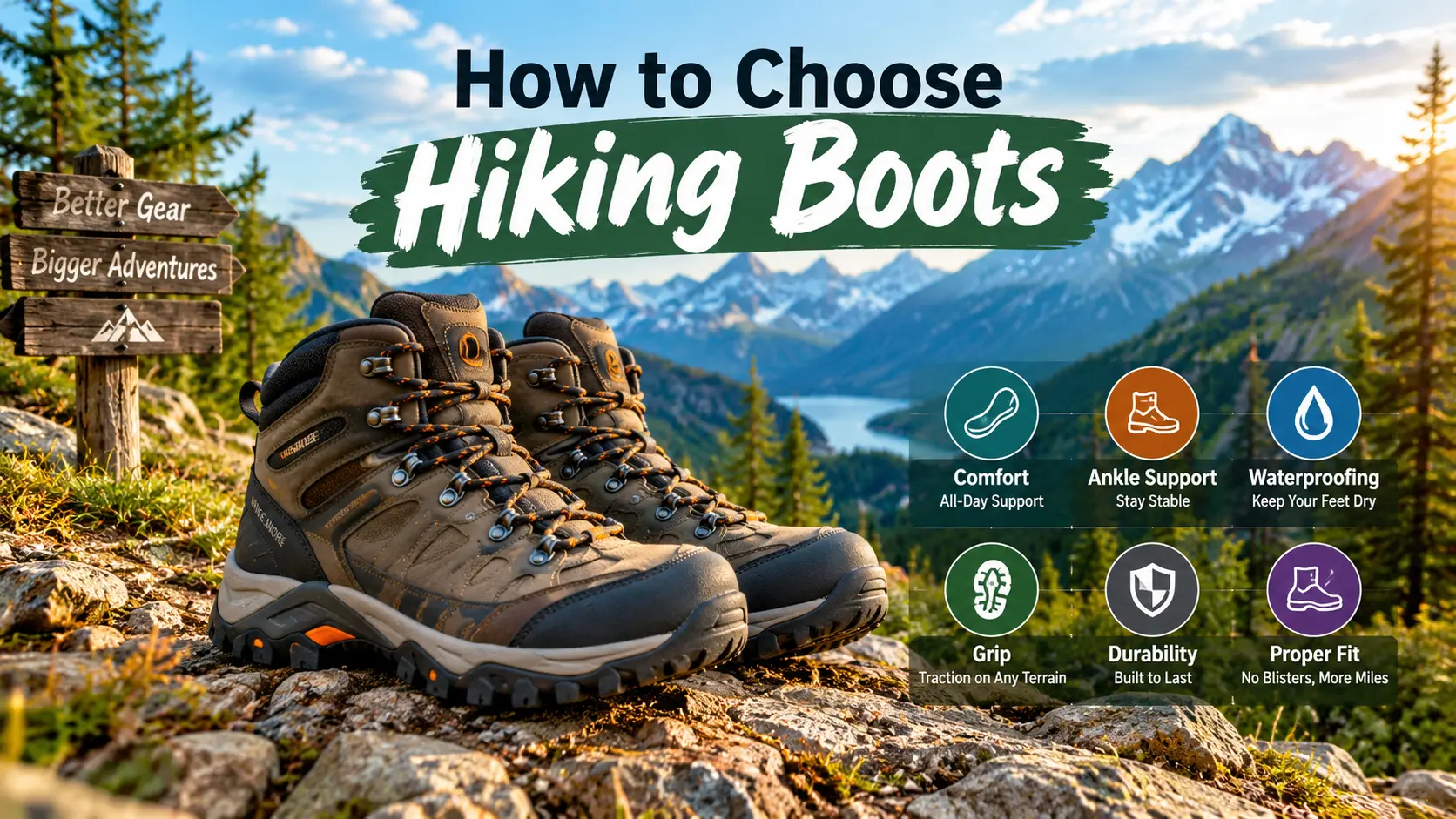
Hiking in snowboard boots on dry trails isn’t recommended. For summer, choose proper hiking footwear, and see our guide on how to choose hiking boots.
Resort Rules and Costs
Uphill access rules, hike-to gates, and any fees vary by resort and season. Check the resort’s official website or ask patrol before you go.
Frequently Asked Questions
Can I go hiking in snowboard boots?
Yes, for short, low-risk climbs. They are made for riding, so long hikes can be tiring.
Is hiking in snowboard boots bad for my feet?
It can cause fatigue or blisters because the boots are stiff and padded for riding. Good fit, socks, and breaks help.
Can I wear snowshoes with snowboard boots?
Many snowshoe bindings can fit them, but check your model’s fit and sizing.
Do I need crampons?
On steep, icy slopes, traction is important. Check that your boots and crampons are compatible.
How far can I hike in snowboard boots?
It depends on terrain, fitness, and your boots. Start with short distances and build gradually.
Final Thoughts
Hiking in snowboard boots can work for short climbs and quick approaches, but it is not ideal for every trip. Pick the right traction, manage your layers, respect avalanche and resort safety rules, and consider different boots for longer routes. Conditions and policies change, so double-check forecasts and official guidance before you go. With smart planning, hiking in snowboard boots can lead to a great ride.