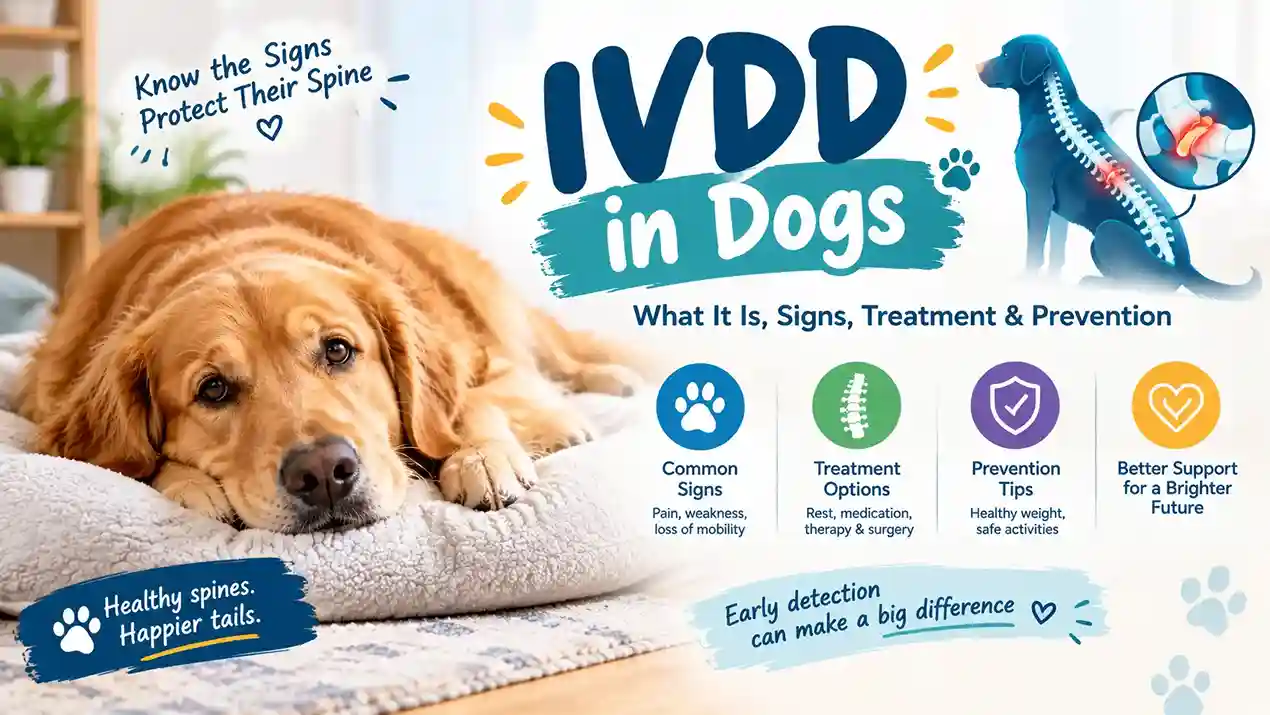
Your dog yelps when picked up, hesitates at the stairs, or suddenly walks with a wobbly back end. Those moments can be frightening, and they are exactly why every dog owner should understand IVDD in dogs. Intervertebral disc disease is a common cause of spinal cord problems, and acting quickly can make a major difference. This guide explains what it is, which dogs are at higher risk, the warning signs to watch for, how vets treat it, and how to plan safer activity at home and outdoors. It is general education only, and your veterinarian should guide every decision about your dog.
What Is IVDD in Dogs?
According to the American College of Veterinary Surgeons (ACVS), intervertebral disc disease occurs when the discs between the spinal bones swell or rupture, damaging the spinal cord through compression and concussion. The severity depends on the type and strength of the force and how long it acts.
It Is a Degenerative Process
The AKC Canine Health Foundation explains that IVDD in dogs is a degenerative process, not something sudden trauma alone causes. A jump or awkward landing may rupture a disc that is already weakened, which is why prevention focuses on long-term spine health.
Which Dogs Are Most at Risk for IVDD in Dogs?
Some breeds face a higher risk because of how their cartilage and spines developed.
Chondrodystrophoid Breeds
The ACVS says chondrodystrophoid breeds such as Dachshunds, Pekingese, Beagles, and Lhasa Apsos account for most cases. It states that Dachshunds make up 45 to 70 percent of cases, with signs usually beginning at 3 to 6 years of age. The AKC Canine Health Foundation also lists Shih Tzus, Corgis, Cocker Spaniels, and Poodles among affected breeds.
Larger Breeds Can Be Affected Too
The ACVS notes that breeds such as Labrador Retrievers and German Shepherds typically show signs later, at 5 to 12 years of age.
Extra Weight Raises the Risk
The AKC Canine Health Foundation says obese dogs of predisposed breeds are especially likely to develop IVDD in dogs. Keeping your dog lean is one of the most practical ways to protect the spine. Ask your vet what a healthy weight looks like for your dog.
Warning Signs of IVDD in Dogs
The ACVS says signs often progress in stages:
- Back or neck pain, sometimes with reluctance to walk
- A wobbly, “drunken” gait in the hind end, with the hind feet crossing
- Loss of hind-limb movement, usually along with loss of bladder control
- Loss of pain sensation, which signals severe spinal cord injury
Owners may also notice yelping, a hunched posture, or refusing stairs. These are warning signs, not a diagnosis, so call your vet promptly.
When IVDD in Dogs Is an Emergency
The ACVS describes IVDD as generally a true surgical emergency, and says the outlook depends heavily on how much function remains when the pet is evaluated and treated. Go to a veterinarian or emergency hospital right away if your dog:
- Cannot stand or walk normally
- Drags or loses control of the back legs
- Cannot urinate or seems to leak urine
- Is in severe pain or cries out when touched
Do not wait to see if it improves overnight.
How Vets Diagnose and Treat IVDD in Dogs
Diagnosis
The ACVS says diagnosis may include X-rays, CT, MRI, and other tests chosen by the veterinary surgeon.
Medical Management
The ACVS says cage rest, confinement, and pain medication are typically limited to mild first episodes. Never give human pain relievers without your vet’s direction.
Surgery
The ACVS says several surgical techniques exist and that decompression, removing bone over the spinal canal, is nearly always recommended. Your surgeon chooses the approach based on the disc location and experience.
What Recovery May Look Like
The ACVS reports that dogs who still feel pain have about a 90 percent chance of regaining limb use with surgery, compared with 60 to 80 percent with strict medical management. For dogs who have lost pain sensation, it reports 50 to 60 percent regaining limb use with surgery and fewer than 10 percent with medical management. Recovery usually takes weeks to months. These are general figures, and your dog’s outlook depends on the individual case, so ask your vet.
After Surgery
The ACVS says post-surgery care typically includes a hospital stay of 3 to 7 days, bladder care, rehabilitation, and at least 4 weeks of restricted activity. It also notes that about 25 percent of dogs have another disc herniate later, which is why long-term spine care matters.
Everyday Ways to Protect Your Dog’s Spine
Nothing can guarantee prevention, but these habits are common-sense steps to discuss with your vet.
- Keep your dog at a healthy weight
- Use ramps or steps for furniture and cars instead of jumping
- Use a well-fitted harness instead of pulling on the neck
- Schedule regular vet checkups for high-risk breeds
Outdoor Fun With a Back-Conscious Dog
You do not have to give up adventures, but you should plan around your dog’s spine. Talk with your vet first, especially if your dog has a history of back problems or belongs to a high-risk breed. Choose gentle, flat routes, avoid rocky scrambles or repeated jumping, and skip long, steep trails. Browse our hiking trails guides to find easier outings, and make sure you are well prepared too with our tips on how to choose hiking boots. If you are planning a New England trip, our hiking trails in New Hampshire guide is a good starting point. Always check each trail’s dog rules first.
Back-Care Checklist for Dog Owners
- Vet-approved weight goal and feeding plan
- Ramp or steps for furniture and the car
- Well-fitted harness and a comfortable leash
- Non-slip rugs or mats
- Your vet’s number and the nearest 24-hour emergency hospital
Sample Safe-Activity Plan for a High-Risk Breed
This is only an example for a healthy dog with no current back issues. Follow your vet’s advice, and never use it for a dog showing symptoms.
- Morning: A calm, leashed walk on level ground, with a harness.
- Evening: A second easy walk, then a food puzzle.
- Weekend: An easy outing on a flat, familiar trail, with breaks and no steep climbs.
- All week: Use ramps, avoid rough play, and watch for any pain or hesitation.
Frequently Asked Questions
What is IVDD in dogs?
It is a condition where spinal discs swell or rupture and damage the spinal cord, according to the ACVS. The severity depends on the force and how long it acts.
Which dogs are most likely to get IVDD in dogs?
Chondrodystrophoid breeds such as Dachshunds, Beagles, Pekingese, and Lhasa Apsos are most commonly affected, though larger breeds can also develop it.
Can IVDD in dogs be treated without surgery?
Medical management, which includes cage rest and pain medication, is typically limited to mild first episodes, per the ACVS. Your veterinary surgeon will recommend the best option.
Can IVDD in dogs be prevented?
There is no guaranteed prevention. Keeping your dog lean, limiting jumping, and having regular checkups can help support spine health.
Final Thoughts
IVDD in dogs can be scary, but knowing the warning signs and acting fast gives your dog the best chance. Protect your pup with a healthy weight, safe habits, and regular vet care, and never wait if you see weakness, pain, or loss of control. With a good plan, you can keep enjoying life together while keeping your dog’s spine as safe as possible.