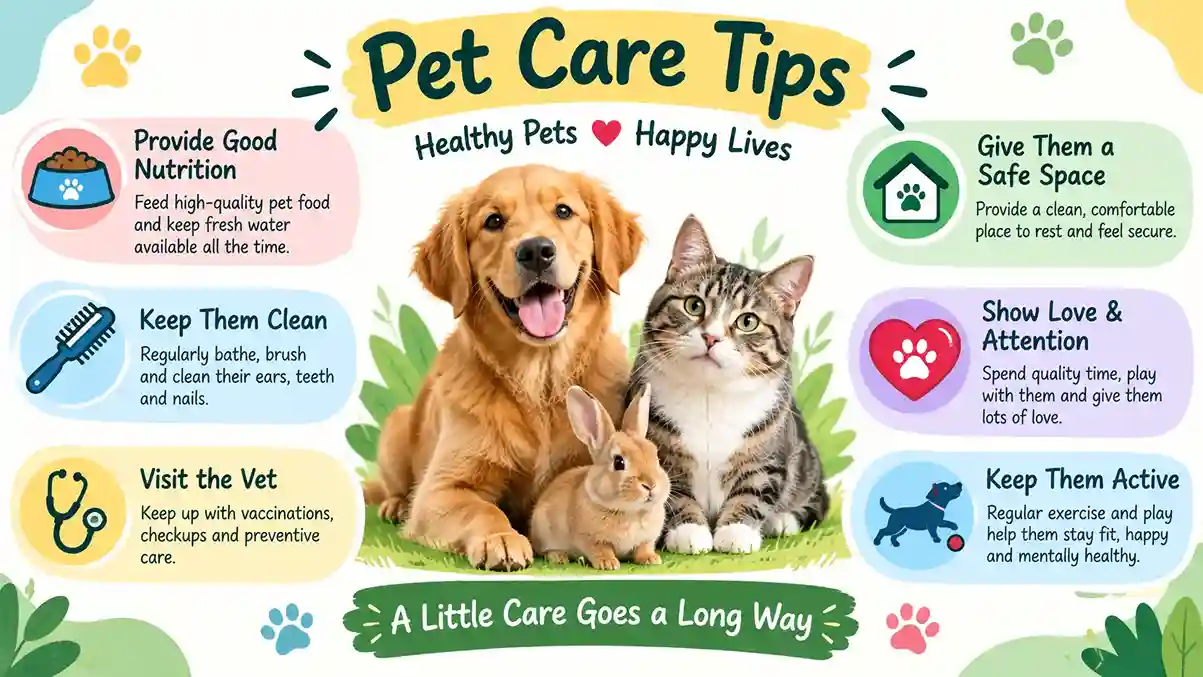
Whether you share your home with a dog, cat, rabbit, or bird, the right pet care tips make daily life easier and safer for everyone. This guide covers nine practical habits, a step-by-step routine, safety notes, a checklist, and a sample weekly plan you can adapt to your own pet.
Quick answer: Good pet care means balanced food, fresh water, regular vet visits, daily exercise, a safe home, and plenty of attention.
Why These Pet Care Tips Matter
Pets depend on us for everything: food, shelter, safety, and medical care. Small daily habits prevent many common problems, from obesity to avoidable emergencies. Every animal is different, so use these pet care tips as a starting point and ask your veterinarian to tailor them to your pet’s species, age, and health.
9 Essential Pet Care Tips for Every Owner
1. Feed a Balanced Diet
Choose food made for your pet’s species and life stage, measure portions, and limit treats. Ask your vet how much to feed, since overfeeding is a common cause of weight gain.
2. Provide Fresh Water
Wash bowls daily and refill with clean water. Offer extra water on hot days and after exercise.
3. Schedule Regular Vet Visits
Routine exams catch problems early. Ask your vet about vaccines, dental care, and how often your pet should be seen.
4. Prevent Parasites
Fleas, ticks, and worms affect many pets. Your vet can recommend prevention that fits your pet and your region.
5. Exercise and Play Every Day
Dogs need walks, cats need play sessions, and small pets need room to move. Exercise supports a healthy weight and a calmer mind.
6. Groom and Check Teeth
Brush coats, trim nails as needed, and look at teeth and gums. Ask your vet for a safe, pet-appropriate dental routine.
7. Use ID Tags and a Microchip
Tags and a microchip help lost pets get home. Keep your contact details current with the microchip registry.
8. Pet-Proof Your Home
Secure cords, medications, cleaners, and trash. Keep toxic plants and foods out of reach.
9. Train and Enrich
Gentle, reward-based training builds trust. Puzzle feeders, toys, and new scents keep minds busy.
Step-by-Step: Build a Daily Pet Care Routine
- Feed at consistent times each day.
- Refresh water and clean bowls.
- Give exercise or playtime.
- Spot-clean litter boxes, cages, or tanks.
- Spend a few minutes grooming or checking your pet’s body, paws, and teeth.
- Note appetite, energy, and bathroom habits.
- Wind down with calm time together.
Following these pet care tips every day turns good intentions into habits.
Pet Safety Notes
- Know the foods that can harm pets, including chocolate, grapes and raisins, onions, and xylitol-sweetened products. Ask your vet for a full list.
- If you suspect poisoning, call your vet or the ASPCA Animal Poison Control Center at (888) 426-4435. It operates around the clock, and a consultation fee may apply.
- Never leave pets in a parked car, even for a few minutes.
- Use a leash, secure carrier, or harness outdoors.
- Keep medications, including your own, locked away.
- Call a vet right away if your pet has trouble breathing, collapses, or has ongoing vomiting or diarrhea.
How to Choose a Veterinarian
Ask friends and neighbors for recommendations, tour the clinic, and ask about emergency hours and which species the vet treats. Make sure the veterinarian is licensed in your state, and save the number of a nearby 24-hour emergency clinic.
Signs Your Pet May Need a Vet
Even the best pet care tips can’t replace a professional exam. Call your vet if you notice:
- Loss of appetite or sudden weight change
- Unusual tiredness
- Limping or stiffness
- Changes in bathroom habits
- Constant scratching or bad breath
- Sudden behavior changes
Pet Care Tips Checklist for New Owners
- Food and bowls
- Collar, ID tag, leash, or carrier
- Bed, crate, or enclosure
- Litter box or waste bags
- Toys and enrichment
- Grooming supplies
- First-aid basics
- Vet appointment booked
- Emergency vet and poison control numbers saved
Pet Care Tips for Different Life Stages
Puppies and Kittens
Young pets need frequent meals, vaccinations on your vet’s schedule, gentle socialization, and safe chew toys.
Adult Pets
Focus on steady routines, weight control, and yearly checkups.
Senior Pets
Older pets may need more frequent exams, softer bedding, and ramps or steps. Tell your vet about changes in mobility, appetite, or behavior.
Sample Weekly Pet Care Plan
- Monday to Friday: Feed, walk or play, and spot-clean.
- Wednesday: Brush the coat and check ears and nails.
- Saturday: Deep-clean bedding, bowls, and enclosures.
- Sunday: Check body condition and plan the week’s supplies.
Taking your dog on the trail? Browse our best hiking trails and read how to choose hiking boots for your own comfort, then pack water, a leash, waste bags, and a tick check for your pup. Always check each trail’s pet rules. These pet care tips work on and off the trail.
Planning Your Pet Budget
Costs vary by species, size, and location. Plan for food, supplies, routine vet care, preventive medicine, and an emergency fund. Ask your vet for estimates, and consider pet insurance quotes if that fits your finances. Check current prices and policy details with official sources before you decide.
Common Pet Care Mistakes to Avoid
- Overfeeding or giving too many treats
- Skipping vet visits when a pet seems fine
- Ignoring dental care
- Leaving pets unsupervised in hot weather
- Giving human medications without veterinary advice
Frequently Asked Questions
What are the most important pet care tips for beginners?
Start with a vet visit, a balanced diet, fresh water, daily exercise, ID, and a pet-proofed home.
How often should I take my pet to the vet?
Many healthy adult pets have a yearly exam, while puppies, kittens, and seniors may need more visits. Ask your vet what schedule fits your pet.
How do I keep my pet safe in hot weather?
Provide shade and fresh water, avoid midday exercise, and never leave a pet in a parked car.
Can I give my pet human food?
Some foods are toxic, so check with your vet before sharing any people food.
Where can I find reliable pet care tips?
Start with your veterinarian, then check trusted sources like the AVMA pet owner resources and the ASPCA.
Final Thoughts
Great pet care comes down to consistent habits: good food, clean water, exercise, safety, and regular vet care. Use these pet care tips to build a routine that fits your pet and your schedule, and adjust as your pet grows older. Rules, products, and veterinary guidance change, so double-check details with your vet and official sources. With patience and attention, these pet care tips can help your companion live a happier, healthier life.