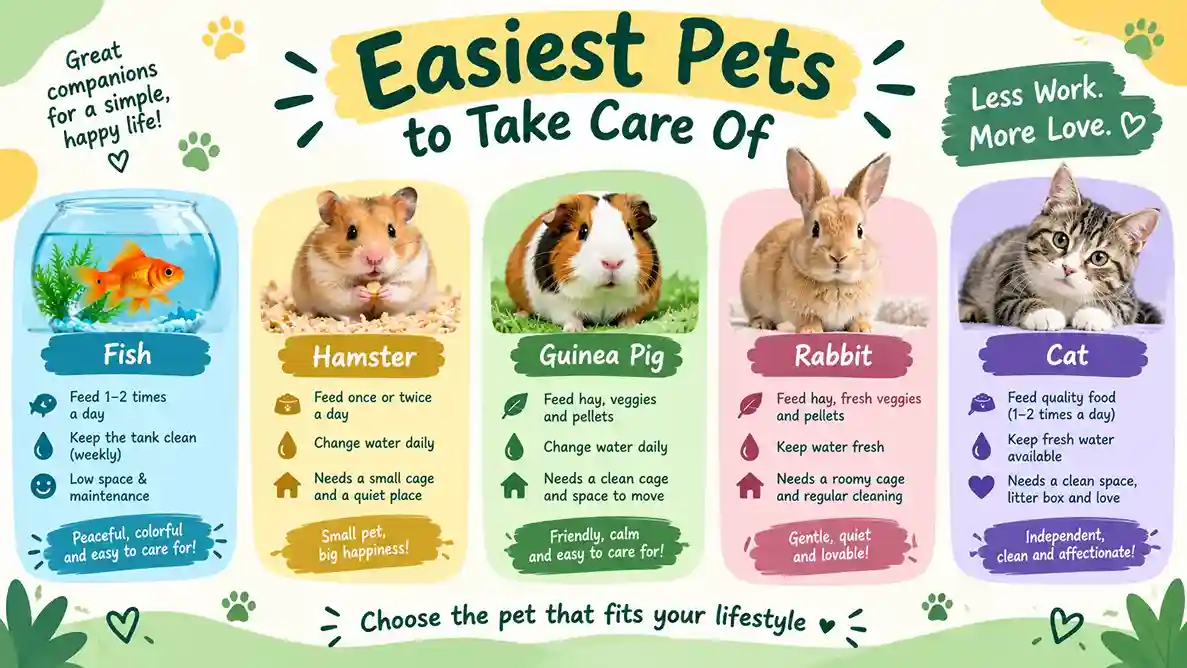
Want a pet but worried about time, space, or money? The easiest pets to take care of need simple routines, modest setups, and fewer surprises, though no animal is truly zero-effort. This guide ranks seven beginner-friendly choices, shows how to choose one step by step, and includes safety notes, a checklist, and a sample weekly routine.
Quick answer: Adult cats, betta fish, leopard geckos, crested geckos, budgies, guinea pigs, and Syrian hamsters are popular beginner picks. Every one still needs daily food, water, and a clean, safe home.
What Makes the Easiest Pets to Take Care of?
When people search for low-maintenance companions, they usually mean a pet that fits their schedule. Look at these factors before you decide:
- Daily time: how long feeding and cleaning take
- Space: enclosure or room size
- Setup: heat, filters, or special lighting
- Cost: food, supplies, and vet care
- Lifespan: how many years you are committing to
- Interaction: how much attention the animal needs
The easiest pets to take care of are the ones whose needs match your real life, not your best-case schedule.
7 of the Easiest Pets to Take Care of for Beginners
1. Adult Cats
Adult cats usually take to a litter box naturally and can be happy indoors with toys and a scratching post. Plan on daily feeding, fresh water, and scooping.
2. Betta Fish
Bettas thrive in a properly sized, filtered, heated tank. Feed small amounts, because overfeeding fouls the water, and change part of the water on a regular schedule.
3. Leopard Geckos
These gentle reptiles live in a warm enclosure with hiding spots and eat insects. Wash your hands after handling, since reptiles can carry Salmonella.
4. Crested Geckos
Crested geckos live in tall enclosures and eat a commercial powdered diet mixed with water. They need regular misting to keep humidity in the right range.
5. Budgies
Budgies are small, social birds that enjoy daily interaction, fresh food, and a clean cage. Ask a vet about pairing them if you can’t be home often.
6. Guinea Pigs
Guinea pigs are friendly and vocal. They need unlimited hay, fresh vegetables, vitamin C, and roomy housing, and they do best with a companion.
7. Syrian Hamsters
Syrian hamsters live alone and are active at night. Give them a large cage, deep bedding, a wheel, and gentle handling once they are comfortable.
Quick Comparison of the Easiest Pets to Take Care of
| Pet | Space needed | Handling | Special setup |
|---|---|---|---|
| Adult cat | Medium | High | Litter box |
| Betta fish | Small | None | Heated, filtered tank |
| Leopard gecko | Small | Light | Heat source |
| Crested gecko | Small | Light | Humidity |
| Budgie | Medium | Medium | Daily interaction |
| Guinea pig | Medium | High | Hay, companion |
| Syrian hamster | Small | Light | Wheel, deep bedding |
These ratings are general, so confirm each species’ needs with a vet or shelter.
How to Choose Your Pet, Step by Step
- List your weekly free hours and monthly budget.
- Check your lease, school or HOA rules, and local laws.
- Narrow the list to two or three of the easiest pets to take care of.
- Talk with a shelter, rescue, or reputable breeder.
- Find a nearby vet who treats that species.
- Buy and set up supplies before pickup day.
If you can’t commit for years, try volunteering or fostering first.
Pets That Look Easy but Aren’t
Rabbits, large parrots, and many exotic reptiles often need specialized diets, space, social time, or veterinary care. Rabbits, for example, need daily exercise and attention. Research thoroughly before choosing them as beginner pets.
Setting Up Your Home
Choose a quiet spot away from drafts, direct sun, and loud electronics. Secure cords, cover small gaps, and store cleaners and medications in closed cabinets. Set up enclosures and tanks before your pet arrives so the first day is calm.
Safety Notes
- Keep toxic foods, plants, and cleaners out of reach. For a suspected poisoning, call your vet or the ASPCA Animal Poison Control Center.
- Supervise children around all animals and teach gentle handling.
- Wash your hands after touching pets, cages, tanks, or supplies.
- Never release unwanted pets outdoors. Contact a shelter or rescue instead.
- Call a vet if your pet stops eating, hides, or seems unusually tired.
Starter Checklist for the Easiest Pets to Take Care of
- Species-appropriate food
- Water bowl, bottle, or tank conditioner
- Enclosure, tank, cage, or litter box
- Heat, light, filter, or misting tools if needed
- Hideout and enrichment
- Cleaning supplies
- First vet visit scheduled
- Emergency vet number saved
Sample Weekly Routine
- Daily: Feed, refresh water, spot-clean, and check on your pet.
- Twice weekly: Handle or play gently, if your pet enjoys it.
- Weekly: Deep-clean bedding, cages, or litter, and replace part of tank water.
- Monthly: Restock supplies and review your budget.
- Before travel: Arrange a trusted pet sitter.
Spend weekends outdoors? Browse our best hiking trails and read how to choose hiking boots, then plan pet care before you leave.
Common Mistakes to Avoid
- Buying on impulse without researching care needs
- Overfeeding, especially fish
- Skipping vet visits because a pet seems healthy
- Keeping social animals alone
- Underestimating how many years a pet will live
Budget and Rules to Check
Costs vary by species, size, and region. Plan for food, supplies, routine vet care, and an emergency fund, and see the ASPCA’s pet care resources for guidance. Some leases, cities, and states restrict certain animals, so verify local rules before you bring home any of the easiest pets to take care of.
Frequently Asked Questions
What are the easiest pets to take care of for beginners?
Adult cats, betta fish, leopard geckos, and guinea pigs are common choices, though each needs daily care.
What are the easiest pets to take care of in an apartment?
Fish, geckos, hamsters, and budgies need little floor space, and many cats do well indoors. Check your lease first.
Which pets are best for kids?
Many can work with adult supervision, but an adult should handle the main care. Choose a gentle species and teach safe handling.
Do low-maintenance pets need vet care?
Yes. All pets benefit from checkups, and exotic species may need a vet with specific experience.
How much time do pets need each day?
It varies by species. Most need a short daily routine, and social animals need regular attention beyond feeding.
Final Thoughts
The easiest pets to take care of match your schedule, space, and budget. Start with research, choose an animal you can care for happily over its whole life, and book a vet visit early. Care needs, costs, and local rules can change, so double-check details with a veterinarian and official sources. With a little planning, the easiest pets to take care of can bring comfort and joy to almost any home.