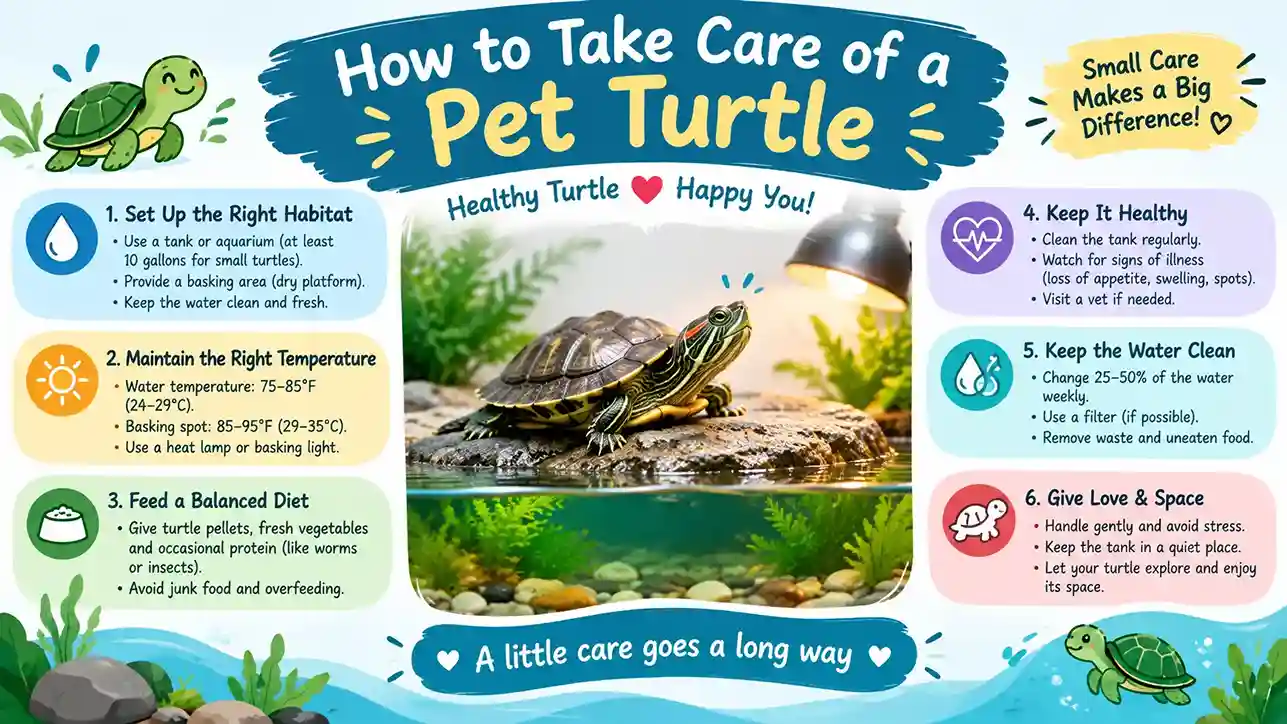
A pet turtle can be a fascinating, long-lived companion, but turtles are not low-effort pets. Learning how to take care of a pet turtle before you buy one helps you avoid health risks, legal problems, and an unhappy animal. This guide covers habitat setup, feeding, hygiene, a checklist, and a sample weekly plan.
Quick answer: Give your turtle a spacious tank with clean, filtered water, a dry basking area with heat and UVB light, a balanced diet, regular vet care, and strict hand-washing habits.
Before You Buy: How to Take Care of a Pet Turtle Responsibly
Many turtles live for decades, so this is a long commitment. Research the exact species, since needs vary widely between aquatic turtles, semi-aquatic turtles, and land-dwelling tortoises. Ask whether your lease, city, or state limits turtle ownership.
Legal and Health Basics
A federal law bans selling turtles with shells shorter than 4 inches as pets. The CDC advises buying only larger turtles from a reputable pet store or rescue. It also says pet turtles are not recommended for children younger than 5, adults 65 and older, or people with weakened immune systems. Any pet turtle can carry Salmonella, even a healthy-looking one. See the CDC’s turtle and Salmonella guidance for current advice.
Choosing the Right Turtle
Common aquatic pet species include painted turtles, red-eared sliders, and musk or mud turtles. Each has different adult sizes and needs. Ask a vet, rescue, or reputable seller how big your turtle will get and what it will require.
How to Take Care of a Pet Turtle: Habitat Setup, Step by Step
- Identify your turtle’s species and ask a reptile vet or rescue for a care sheet.
- Choose a large tank. A common rule of thumb is about 10 gallons of water per inch of shell length, but species differ.
- Add a strong filter rated for a larger tank, since turtles are messy.
- Build a dry basking area where your turtle can climb out completely.
- Add a heat lamp over the basking spot and a UVB light made for reptiles.
- Place thermometers in the water and basking zone, and follow your species’ temperature range.
- Treat tap water with a dechlorinator, and add safe hiding spots and décor.
Replace UVB bulbs on the manufacturer’s schedule, since output fades even when the light still glows.
Why Water Quality Matters
Turtles eat, swim, and relieve themselves in the same water. Dirty water can lead to skin and shell problems and can spread germs. A big part of how to take care of a pet turtle is keeping its water clean with a good filter and regular partial water changes.
Feeding Your Pet Turtle
What to Feed
Most pet turtles do well on commercial turtle pellets, leafy greens, and occasional species-appropriate protein or aquatic plants. Younger turtles often eat more protein and adults eat more plants, but ask your vet for a plan.
Feeding Tips
- Feed at consistent times and remove leftovers.
- Avoid overfeeding, which can cause obesity and dirty water.
- Offer calcium sources as your vet recommends.
Knowing how to take care of a pet turtle includes watching its diet closely.
Daily and Weekly Care Routine
- Daily: Feed, check water and basking temperatures, and look at your turtle’s eyes, shell, and behavior.
- Weekly: Test or refresh part of the water, scrub the basking area, and clean the filter as directed.
- Monthly: Deep-clean the tank and inspect lights and equipment.
Clean tanks and supplies away from kitchens and food areas, and disinfect surfaces afterward.
Enrichment and Tank Placement
Put the tank on a sturdy stand in a quiet spot, away from drafts. Avoid direct sunlight on a glass tank, which can overheat the water. Add plants, rocks, and hiding places so your turtle can explore and feel secure.
Handling and Hygiene Safety Notes
- Wash hands with soap and water right after touching your turtle, its tank, or its water.
- Don’t kiss or cuddle your turtle or let it touch your face.
- Keep turtles away from kitchens, food prep areas, and children’s play spaces.
- Supervise children and teach hand-washing.
- Never release a turtle into the wild. Contact a rescue or pet store about rehoming. Releasing pets can harm wildlife and may be illegal in some states.
Signs Your Turtle Needs a Vet
Call a reptile-savvy veterinarian if you see swollen or closed eyes, a soft or damaged shell, trouble swimming, a long refusal to eat, or breathing with an open mouth.
Starter Checklist for How to Take Care of a Pet Turtle
- Large tank and secure setup
- Strong filter
- Basking platform
- Heat lamp and UVB light
- Thermometers
- Water dechlorinator
- Turtle pellets and greens
- Hand soap near the tank
- Reptile vet appointment
- Emergency vet number
Sample Weekly Plan
- Monday: Feed, check temperatures, and inspect the shell.
- Wednesday: Feed, spot-clean, and refresh part of the water.
- Saturday: Clean the filter and basking area.
- Sunday: Review supplies and schedule a vet checkup when due.
Hiking or traveling for the weekend? Browse our best hiking trails and read how to choose hiking boots, then arrange a trusted sitter who knows how to take care of a pet turtle.
Common Mistakes to Avoid
Most problems with how to take care of a pet turtle come from a few common mistakes:
- Buying a tiny turtle on impulse
- Using a tank that is too small
- Skipping UVB or basking heat
- Overfeeding
- Forgetting hand-washing
- Releasing unwanted turtles outdoors
Costs and Rules to Check
Prices vary widely by species, tank size, equipment, and where you buy. Budget for the tank, lights, filter, food, electricity, and routine vet care. Rules also vary by state and city, so verify local regulations and any permits with your state wildlife agency before buying. Confirm current costs and laws with official sources before you commit.
Frequently Asked Questions
How do I take care of a pet turtle as a beginner?
Start with species research, a large filtered tank, basking heat, UVB light, a balanced diet, and a reptile vet. Wash your hands after every contact.
How long do pet turtles live?
Many live for decades with proper care, but lifespan varies by species, so ask a vet or reputable breeder.
How big should a turtle tank be?
Bigger is better. A common rule of thumb is about 10 gallons per inch of shell length, but verify the guidance for your species.
Can I hold my pet turtle?
You can handle it gently, but wash your hands right after, and avoid kissing or cuddling. Turtles of any size can carry Salmonella.
Where can I learn more about how to take care of a pet turtle?
Ask a reptile veterinarian, a reputable rescue, and official sources like the CDC.
Final Thoughts
Learning how to take care of a pet turtle takes research, patience, and a commitment that can last for decades. Provide a large habitat, proper heat and light, a balanced diet, and careful hygiene, and schedule regular vet visits. Laws, health guidance, and species needs can change, so double-check details with your vet and official sources. With the right setup, how to take care of a pet turtle becomes a daily routine that keeps your pet healthy and your household safe.